Sand Molds Casting: The Art of Shaping Liquid Metal
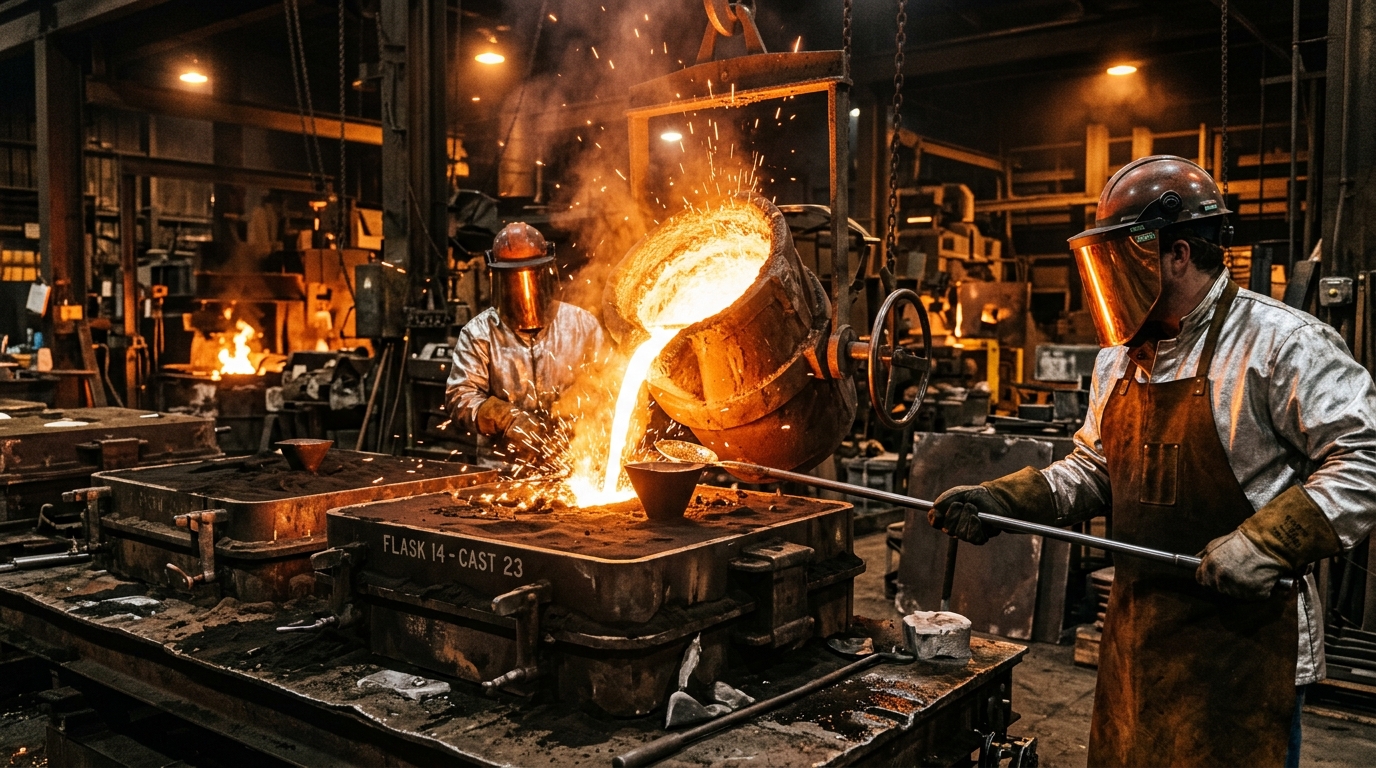
If you have ever watched a glowing stream of molten metal pour into a dark bed of sand, you have seen sand molds casting in action. It is one of the oldest and most versatile manufacturing processes on Earth. From engine blocks to sculptures, countless metal objects begin their lives inside a simple sand mold.
In this journalist‑style guide, we will explore everything about sand molds casting. You will learn the step‑by‑step process, the differences between green sand molding and other methods, how to create a metal casting sand mold at home, who works in this field, and what safety measures matter most. No fluff – just clear, human‑written information.
Who Is This Article For?
Sand molds casting is not just for industrial giants. It belongs to a wide range of people:
- Hobbyist metal casters – You have a small furnace (propane or electric) and want to turn scrap aluminum into useful parts.
- Artists and sculptors – You work in bronze or aluminum and need a reliable way to replicate complex shapes.
- Engineering students – You study manufacturing processes and want a practical understanding of sand casting.
- Career seekers – You are curious about foundry jobs and what they involve.
- DIY mechanics – You need to cast a replacement part that is no longer manufactured.
Whether you are a beginner with a backyard setup or a professional running a commercial foundry, the principles of sand molds casting remain the same.
Sand Molds Casting: The Step‑by‑Step Process
Let us break down sand molds casting into clear, repeatable steps. This is the same basic sequence used 3,000 years ago – and in today’s automated foundries.
Step 1: Pattern Making
Every casting starts with a pattern – a replica of the final object. Patterns are slightly larger than the desired part to account for metal shrinkage as it cools. They are typically made from:
- Wood (cheap, easy to shape – good for small batches)
- Metal (expensive, durable – for high production)
- Plastic or 3D‑printed resin (great for complex or one‑off designs)
Step 2: Preparing the Sand Mix
The sand must hold its shape while allowing gases to escape. A typical sand molds casting sand contains:
- Silica sand (the base)
- Bentonite clay (binder)
- Water (activates the clay)
- Sea coal (improves surface finish, optional)
The mixture is mulled (mixed and aerated) to achieve a consistent texture – like damp brown sugar that holds a fist print.
Step 3: Molding – Creating the Cavity
A flask (two‑part frame: cope on top, drag on bottom) holds the sand. The pattern is placed in the drag, and sand is rammed around it. Then the cope is added, more sand is rammed, and the pattern is removed – leaving a hollow cavity.
Step 4: Adding Sprue and Risers
A sprue is a vertical hole through which metal is poured. Risers are additional channels that allow gases to escape and provide extra metal to compensate for shrinkage. These are cut into the sand after the pattern is removed.
Step 5: Pouring
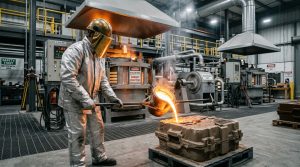
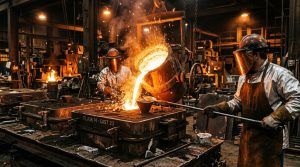
Molten metal (aluminum, bronze, iron, etc.) is ladled from the furnace and poured directly into the sprue. The metal fills the cavity by gravity.
Step 6: Cooling
The mold is left undisturbed while the metal solidifies. Cooling time depends on metal type and part thickness – from a few minutes for small aluminum parts to hours for large iron castings.
Step 7: Shakeout
Once cooled, the sand mold is broken apart. The casting is removed, and the sand is collected for reclamation.
Step 8: Cleaning and Finishing
Excess metal (sprue, risers, flash) is cut off. The casting may be ground, sanded, machined, or heat‑treated to meet final specifications.
Green Sand Molding: The Industry Standard
Among all sand molds casting methods, green sand molding is the most popular. The term “green” refers to the fact that the mold is used in a damp, unbaked state.
Why is green sand molding so common?
- Low cost – Sand and clay are cheap and reusable.
- High speed – Automated lines can produce hundreds of molds per hour.
- Versatility – Works for iron, steel, aluminum, brass, and bronze.
- Good detail – Capable of reproducing fine features.
The green sand recipe
Professional foundries use a precise blend:
- 85–90% silica sand (grain size AFS 50–70)
- 7–10% bentonite clay
- 3–5% water
- Up to 5% sea coal (for iron castings to prevent sand from sticking)
Hand ramming vs. machine molding
- Hand ramming – For small shops or prototypes. A worker uses a pneumatic or manual rammer to compact sand around the pattern. Slower but flexible.
- Machine molding – Squeeze, jolt‑squeeze, or impact machines compact the sand quickly and uniformly. Essential for high production.
Common defects in green sand molding and how to fix them
| Defect | Cause | Solution |
| Gas porosity | Wet sand or poor venting | Reduce moisture, add more vent holes |
| Sand inclusions | Loose sand from low strength | Increase clay content or ram harder |
| Blowholes | Trapped steam or air | Preheat the mold slightly or add risers |
| Cuts and washes | Metal eroding the sand | Improve sand strength or reduce pouring speed |
Metal Casting Sand Mold: Types Beyond Green Sand
The phrase metal casting sand mold covers several variants. Each has its own advantages depending on the metal, part complexity, and production volume.
1. Dry sand mold
- Same clay‑water mix as green sand, but baked in an oven (300–600°F) before pouring.
- Stronger, so it can handle larger castings.
- Used for heavy iron or steel parts.
2. Resin‑bonded sand mold
- Uses organic resin as a binder instead of clay.
- Cured chemically or with heat.
- Provides excellent surface finish and dimensional accuracy.
- More expensive; sand cannot be easily reclaimed.
3. Sodium silicate (CO₂) mold
- Sand mixed with sodium silicate. Hardened by exposing to CO₂ gas.
- Fast curing – ideal for prototype or short‑run metal casting sand mold needs.
- No heating required.
4. Shell mold
- Resin‑coated sand is blown onto a heated metal pattern, forming a thin shell.
- Two shells are glued together to form the mold.
- Very smooth surface finish – close to die casting. Used for high‑precision parts like gears and valve bodies.
Choosing the right sand mold for your project
| If you need… | Choose… |
| Low cost, high volume, simple parts | Green sand molding |
| Large, heavy castings | Dry sand mold |
| Smooth finish, tight tolerances | Resin‑bonded or shell mold |
| Rapid prototypes | Sodium silicate (CO₂) mold |
Career Paths in Sand Molds Casting
Now let us talk about jobs. The sand molds casting industry needs skilled people. Here are common roles.
1. Pattern maker
Creates patterns from wood, metal, or plastic. Requires precision craftsmanship or CNC programming.
Salary range: $45,000 – $70,000
2. Molding machine operator
Runs automatic or semi‑automatic molding equipment. Monitors sand quality and cycle times.
Salary range: $38,000 – $55,000
3. Sand technician
Tests sand properties – moisture, permeability, green compression strength. Helps maintain the sand system.
Salary range: $40,000 – $60,000
4. Core maker
Produces sand cores that create internal cavities in castings. Often uses cold‑box or shell‑core machines.
Salary range: $35,000 – $52,000
5. Foundry metallurgist
Oversees metal composition, pouring temperatures, and heat treatment. Requires a bachelor’s degree in metallurgy or materials science.
Salary range: $70,000 – $110,000
6. Quality control inspector
Inspects castings using visual, dimensional, and non‑destructive testing (X‑ray, dye penetrant, ultrasound).
Salary range: $42,000 – $65,000
How to get started
- Take a community college course in foundry technology.
- Apply for an entry‑level molding or shakeout position – many foundries train on the job.
- Earn certifications from the American Foundry Society (AFS).
- Watch YouTube channels like “Make Like Proo” to see real‑world sand molds casting in action.
Personal Life: A Day in the Life of a Sand Molder
To bring this to life, let me introduce you to Elena. She has worked as a green sand molding line operator for eight years at a mid‑sized aluminum foundry in the Midwest.
“Most people think my job is just dirt and sweat,” Elena says. “But it’s actually a lot of chemistry. Every morning I check our sand: moisture, permeability, and compactability. If the numbers are off, every casting will scrap.”
Elena’s shift starts at 6 a.m. She puts on her PPE: a hard hat with a face shield, safety glasses underneath, a fire‑resistant jacket, leather gloves, and steel‑toed boots with metatarsal guards. The noise from the molding machine and the shakeout conveyor is loud – she wears foam earplugs plus earmuffs.
Her workstation is a green sand molding machine that produces 90 molds per hour for automotive transmission housings. She monitors the sand feed, inspects each mold for cracks, and ensures the cores are placed correctly. Every hour, she takes a sand sample to the lab for testing.
Outside of work, Elena is careful to leave her work boots and jacket at the plant. “Silica dust is no joke,” she says. “I shower before I even get in my car.” The foundry provides industrial laundry for work clothes and annual lung function tests.
Despite the challenges, Elena loves her job. “There is something magical about pouring liquid metal into sand and opening the mold the next day to find a perfect part. That never gets old.”
Her advice for newcomers: “Respect the sand. Treat every mold like it matters – because it does. And always, always wear your face shield. I have seen molten metal pop and fly six feet. That will blind you in an instant.”
Frequently Asked Questions
1. What is the difference between sand molds casting and die casting?
Sand molds casting uses a disposable sand mold – cheap and flexible but slower. Die casting uses a permanent metal mold (die) – expensive upfront but very fast for high volumes.
2. Can I do sand molds casting at home?
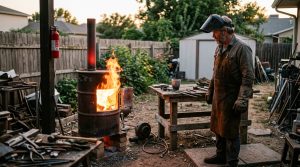
Yes. Many hobbyists cast aluminum using a small propane furnace and green sand made from play sand, bentonite clay, and water. Always work outdoors or in a well‑ventilated area and wear full PPE.
3. What metals can I pour into a metal casting sand mold?
Almost any metal: aluminum, bronze, brass, gray iron, ductile iron, steel (requires higher temperature and special sand), and even gold or silver for jewelry.
4. How do I make green sand at home?
Mix 10 parts fine silica sand (not beach sand – it contains salt) with 1 part bentonite clay. Add water slowly until the mixture feels like a damp snowball – it should clump when squeezed but not drip. Test by making a small ball: if it holds its shape without crumbling, it is ready.
5. What is the most common mistake beginners make in sand molds casting?
Not venting the mold properly. Without vent holes, steam and gases have nowhere to escape, causing gas porosity (bubbles) in the casting. Always poke several small vent holes from the mold cavity to the top surface.
6. How many times can I reuse sand?
In a hobby shop, you can reuse sand 5–10 times if you remix it with fresh clay and water after each use. In a professional foundry, sand is continuously reclaimed – magnets remove metal, screens separate grain sizes, and thermal reclamation burns off organics.
7. Where can I learn sand molds casting for free?
YouTube is an excellent resource. Channels like “Make Like Proo,” “Olfoundryman,” and “myfordboy” show detailed step‑by‑step sand molds casting projects. Also check the American Foundry Society’s website for free educational materials.
Conclusion: Sand, Fire, and Human Ingenuity
Sand molds casting is one of humanity’s oldest manufacturing techniques – and it remains one of the most important. From the Bronze Age to today’s automotive and aerospace industries, the ability to shape liquid metal with a simple sand mold has never lost its value.
Whether you are a green sand molding operator in a high‑volume foundry, a backyard caster making aluminum ingots, or an artist creating bronze sculptures, the principles are the same: prepare the sand, melt the metal, pour with care, and break open the mold to reveal something new.
We hope this guide has answered your questions, shown you the career possibilities, and given you a realistic view of the personal side of this craft. If you have your own sand molds casting stories or tips, share them below – and always, always respect the heat.


Post Comment