The Ultimate Smelting Furnace Guide for Hobbyists & Pros
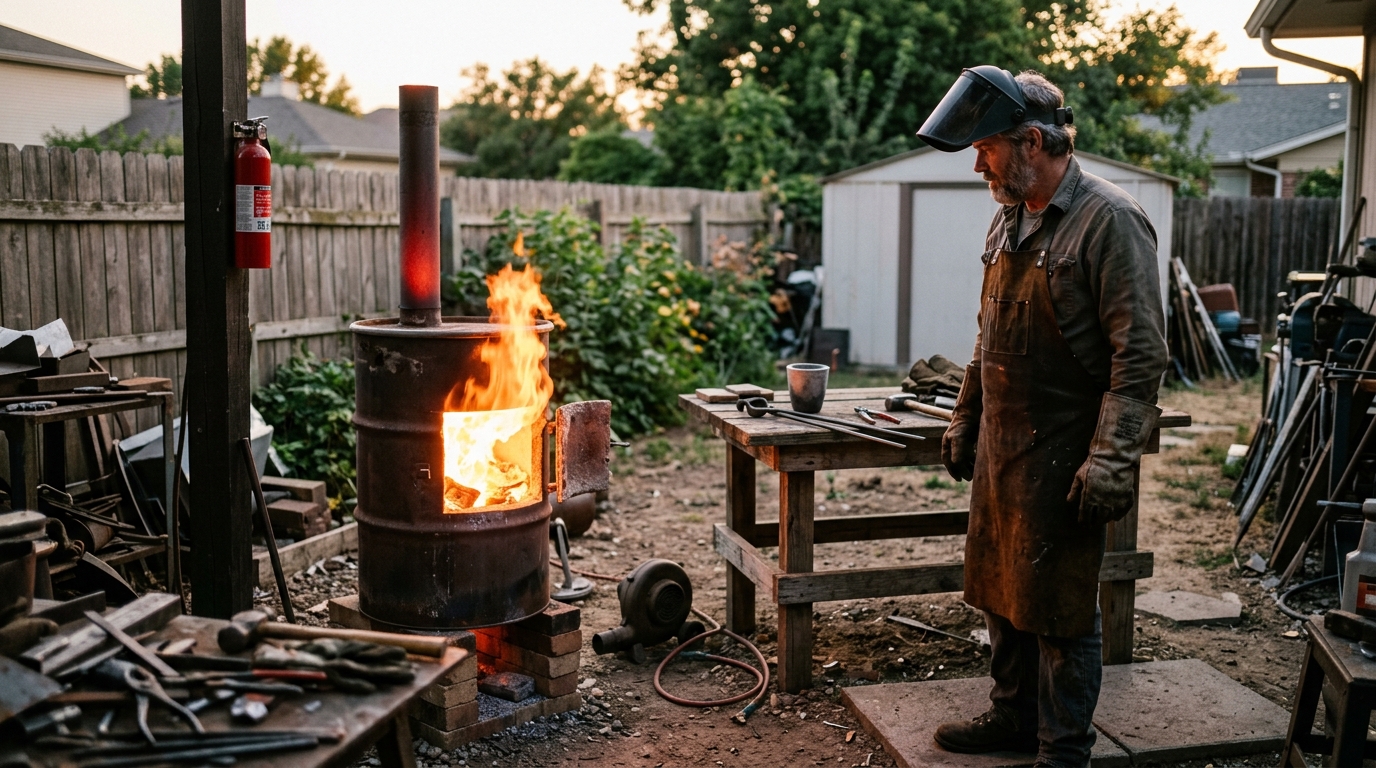
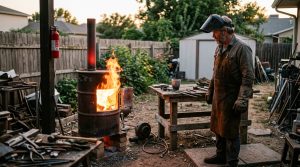
The roar of a smelting furnace is unlike any other sound – a dragon’s breath of raw heat and molten possibility. Step inside the workshop of Tom Gable, a 45‑year‑old former welder who traded his factory coveralls for a leather apron and a backyard foundry. On a crisp Saturday morning, Tom fires up his latest creation: a homemade smelter that can turn scrap aluminium and brass into gleaming ingots, custom car parts, and even medieval‑style bells.
“Most people think you need a million‑dollar industrial setup,” Tom says, wiping soot from his safety glasses. “But with the right design and respect for safety, a smelting furnace can live in a suburban garage – as long as your neighbours don’t mind the glow.”
This article follows Tom’s journey, from his early failed experiments to becoming a trusted voice in the DIY metal community. Along the way, we’ll explore the art of building homemade smelters, the daily reality of living with a metal melting furnace, and answer the most burning questions about this ancient, addictive craft.
Meet the Master of the Smelting Furnace (Who Is He?)
Tom Gable wasn’t born with a crucible in his hand. He grew up in rural Ohio, watching his father repair farm equipment with a simple oxy‑acetylene torch. But the real spark came ten years ago, when he stumbled upon a YouTube video of a backyard founder pouring liquid bronze into a sand mould. “That was it,” he recalls. “I realised a smelting furnace isn’t some mysterious industrial monster – it’s a controlled fire, built by hand, that gives you god‑like power over metal.”
After a decade of welding and machining, Tom understood heat and metallurgy, but building his first furnace from a steel bucket and refractory cement was humbling. “It cracked on the third firing. Molten aluminium leaked out like lava. I almost set my shed on fire.” That failure taught him the first rule of any smelting furnace: respect the materials, or they will teach you respect.
Today, Tom runs “Gable Foundry” – a one‑man operation that produces custom castings for local blacksmiths, knife makers, and restoration enthusiasts. He also teaches weekend workshops, where students learn to build their own homemade smelters for less than $200. “My goal is to demystify the process. Anyone with patience and a healthy fear of 2,000°F can do it.”
Building Homemade Smelters: The Craftsman’s Journey (Career)
Tom’s career as a backyard founder didn’t happen overnight. It evolved through three distinct phases, each defined by a different type of smelting furnace.
Phase 1: The Charcoal “Tin Can” Furnace
“My first real furnace was a one‑gallon paint can lined with plaster of Paris and sand,” Tom laughs. “It was terrible. It melted a few coins, but the refractory crumbled after two uses. That’s when I learned that homemade smelters need proper high‑temperature materials – not DIY plaster.”
Phase 2: The Propane‑Fired Bucket Furnace
After reading online forums, Tom built a classic “coffee can” propane furnace using ceramic fibre blanket (kaowool) and a rigidiser. “That little metal melting furnace changed everything. I could melt a pound of aluminium in ten minutes. I started making small castings – bottle openers, belt buckles, chess pieces. Friends wanted them. That’s when I realised this could be more than a hobby.”
Phase 3: The Big Brick Smelter
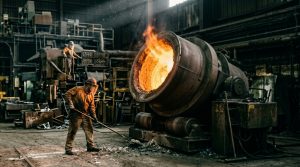
Now Tom’s main smelting furnace is a 55‑gallon steel drum lined with 2 inches of castable refractory, capable of melting 20 kg of copper or aluminium bronze. “A furnace this size isn’t just bigger – it’s a different beast. You need a forced‑air propane burner, a lifting shank for the crucible, and a serious ventilation system. But the payoff? I can pour an entire engine block replica in one shot.”
His career advice for aspiring founders: “Don’t start big. Build a small metal melting furnace first. Learn to control heat, read the colour of steel, and handle a crucible safely. Then scale up. The number of people who build a giant smelter, crack it on first firing, and give up – it’s heartbreaking.”
Life Around the Metal Melting Furnace (Personal Life)
Living with a smelting furnace changes a person – and their backyard. Tom’s partner, Lisa, has learned to tolerate the occasional roar and the smell of burnt sand. “She draws the line at storing scrap metal in the living room,” Tom admits. “But she loves the jewellery I cast for her – a silver ring with a piece of melted‑down motherboard gold.”
Tom’s teenage son, Eli, has become his unofficial apprentice. “Last summer, Eli helped me build a new homemade smelter from a helium tank. He learned about refractory ratios, gas safety, and why you never pour water on a molten metal spill. That’s better than any school science lab.”
But the lifestyle isn’t without sacrifice. Tom’s garage now has a dedicated “hot zone” with firebrick flooring, an exhaust hood, and a five‑foot exclusion area. “My car hasn’t seen the inside of this garage for three years,” he jokes. “But that’s fine – the smelting furnace is more fun to look at.”
Safety is a constant companion. Tom shows me his leather spats, a full‑face shield, welder’s gloves, and a fire extinguisher mounted three steps from the furnace. “I’ve had close calls – a crucible that cracked while full of brass, a burner that flared back. You never get comfortable. You get practiced.”
On weekends, Tom hosts “pour parties” where friends bring scrap metal to melt. “There’s something primal about gathering around a metal melting furnace at dusk, watching the orange glow, and turning old radiators into shiny new shapes. It’s alchemy for the real world.”
Frequently Asked Questions About Smelting Furnaces
Here are the most common questions Tom hears from beginners – answered with practical, hands‑on advice.
1. What’s the difference between a smelting furnace and a metal melting furnace?
This is a common mix‑up. A true smelting furnace extracts metal from its ore (e.g., turning iron ore into metallic iron), which requires extremely high temperatures and a reducing atmosphere. A metal melting furnace simply re‑melts already pure metal (like aluminium cans or copper pipe) for casting. Most DIY builders actually want a metal melting furnace. Tom uses the two terms interchangeably for his audience, but for accuracy: “Unless you’re digging ore and roasting it, you’re melting, not smelting.”
2. Can I build a homemade smelter safely in my backyard?
Yes – with strict precautions. Tom recommends:
- Build outdoors, away from structures and dry grass.
- Never use galvanised steel for the outer shell (toxic fumes when heated).
- Use a proper refractory (castable cement or ceramic blanket) – no “red devil” fireplace mortar.
- Always wear a respirator, full leather protection, and a face shield.
- Keep a class D fire extinguisher for metal fires (water makes it worse).
His best tip: “Join a local foundry club or watch at least five detailed build videos before spending a dime. Homemade smelters are safe when built right – but one mistake can send molten metal flying.”
3. What’s the best fuel for a metal melting furnace?
- Propane (most common): Clean, controllable, ideal for homemade smelters up to 2,300°F. Tom uses a Reil or forced‑air burner.
- Charcoal (cheap but messy): Works well with a hair dryer or bellows. Good for small aluminium melts but creates a lot of ash.
- Waste oil (advanced): Free fuel from garages, but requires pre‑heating and produces fumes. Not for beginners.
Tom’s choice: “Propane is the sweet spot – easy to find, no smoke, and you can fine‑tune the flame with a needle valve.”
4. How long does a homemade furnace last?
With proper curing and careful use, a smelting furnace built with 2,600°F castable refractory can last 50–100 heats. The weak point is the floor: spilling flux or slag eats away at the lining. Tom relines his furnace every two years. “The steel shell lasts forever. The refractory is a consumable – like brake pads on a car.”
5. Can I melt steel in a DIY metal melting furnace?
Most homemade smelters reach 2,000–2,300°F, which melts aluminium (1,220°F), brass (1,700°F), bronze, and even copper (1,980°F). But steel requires 2,500°F+ – beyond the safe limit of many DIY furnaces. “Don’t try it,” Tom warns. “You’ll melt your crucible and your furnace lining. If you want to cast steel, save up for a professional induction furnace.”
6. What’s the biggest mistake beginners make?
“Firing a new furnace too fast,” Tom says without hesitation. “You build it, you’re excited, you crank the propane – and the trapped water turns to steam, cracking the refractory like a bad clay pot. You must cure it: low flame for an hour, then medium for two hours, then a full hot burn. Patience saves your smelting furnace from suicide.”
Final Sparks: Why Build Your Own Smelting Furnace?
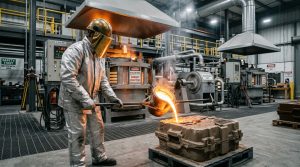
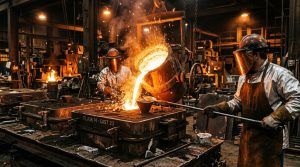
At the end of our interview, Tom fires up his big smelting furnace to melt some scrap copper for a customer’s art project. The propane burner roars to life, and within minutes, the inside of the drum glows a brilliant orange. He slides a crucible of dull red copper scrap into the chamber. Fifteen minutes later, he pulls out a glowing yellow‑white liquid that looks like liquid sunlight.
“This never gets old,” he shouts over the roar. “Every pour is a reminder that ordinary people can do extraordinary things with heat, metal, and a little know‑how.”
Whether you’re a hobbyist looking to cast your own parts, a teacher wanting to demonstrate metallurgy, or just someone who loves building things with fire, a smelting furnace is within your reach. Start small, stay safe, and remember: the best tool in any workshop is respect for the craft.
Now go forth – and melt something magnificent.

Post Comment