How to Make a Crucible for Melting Metal: The Complete Industrial Process
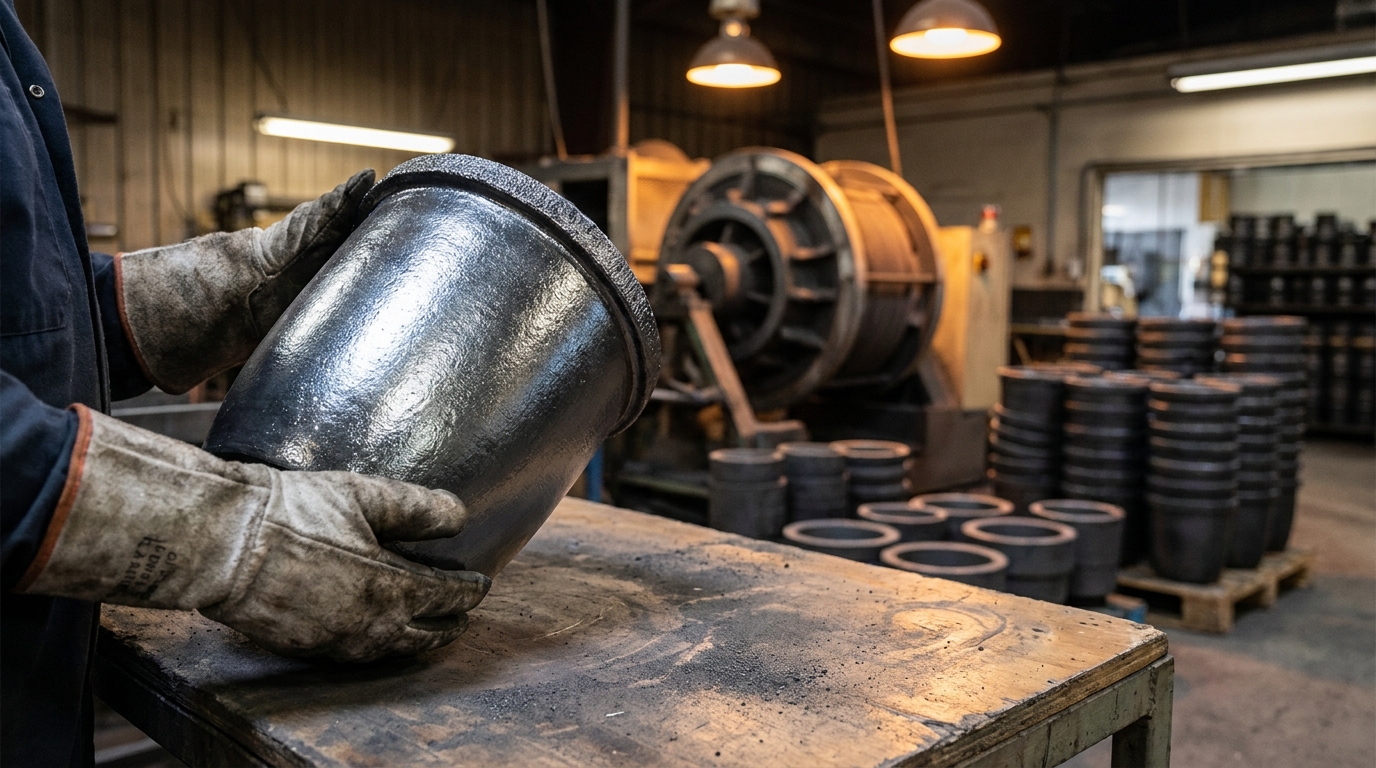
A crucible is a vessel that withstands temperatures high enough to melt metals like aluminum, copper, brass, and even cast iron, all while maintaining its structural integrity and resisting chemical attack from fluxes and slags. For foundries, the crucible is not merely a container—it is a consumable with a direct impact on melt quality, energy efficiency, and workplace safety. Understanding how to make a crucible for melting metal reveals the material science and process discipline that separates a reliable, long-lasting crucible from one that fails prematurely, potentially causing catastrophic molten metal spills.
This article provides a technically detailed, step-by-step walkthrough of industrial crucible manufacturing, based on real production processes observed in a high-performance graphite crucible facility. It is written for factory owners, metal casting professionals, and industrial workers who want to understand what goes into a quality crucible and how to evaluate one.
Why Crucible Quality Matters in Metal Casting
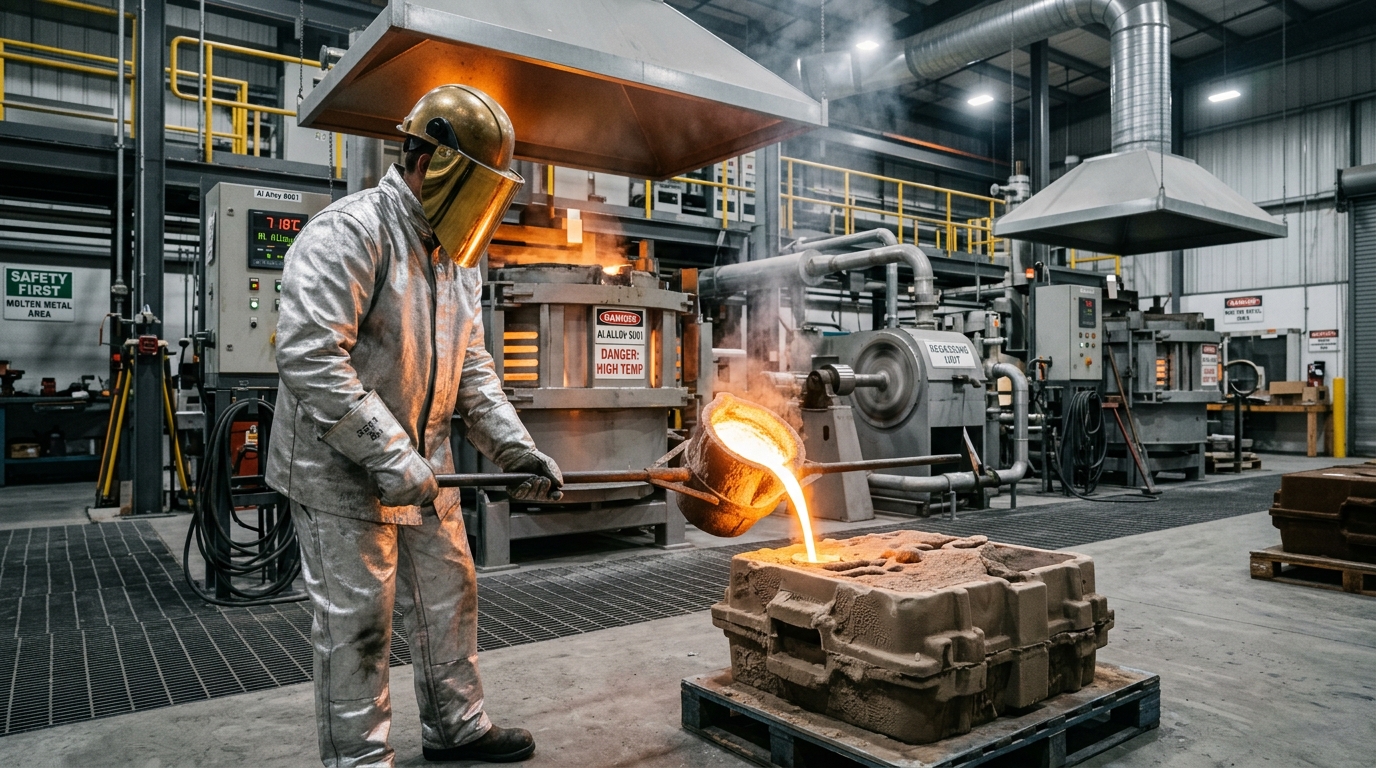
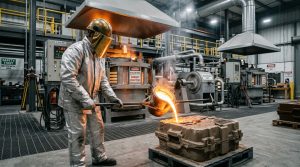
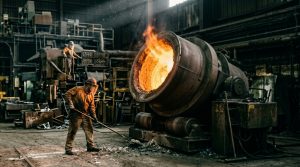
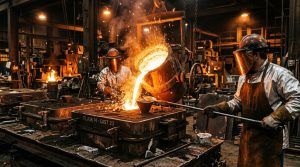
In any foundry operation—whether it is a small art casting studio or a large-scale aluminum recycling plant—the crucible is the primary barrier between a controlled melt and a dangerous floor spill. A failed crucible at 700°C releases molten metal that can damage equipment, halt production, and cause severe injury. Beyond safety, crucible quality affects:
- Melt cleanliness: A degrading crucible introduces non-metallic inclusions into the molten bath.
- Energy consumption: A crucible with consistent wall thickness and thermal conductivity transfers heat more efficiently, reducing fuel or electricity costs.
- Operational throughput: Longer crucible life means fewer furnace shutdowns for replacement and less production downtime.
Graphite crucibles, in particular, are favored for their high thermal conductivity, excellent thermal shock resistance, and non-wetting properties that minimize metal adherence. High-purity graphite crucibles are used extensively in high-volume metal melting operations for aluminum and copper-based alloys, where thermal stability and chemical inertness are critical.
Raw Materials: The Foundation of a Durable Crucible
The manufacturing process begins not on the production floor but in the formulation. A quality graphite crucible is made from a carefully proportioned mixture of three primary materials:
- Graphite Powder
Graphite serves as the refractory backbone, providing thermal conductivity, heat resistance, and the non-wetting surface that prevents molten metal from sticking. The graphite used is typically natural flake graphite, selected for its high carbon content and crystalline structure.
- Clay (Binder)
Clay acts as the green strength binder that holds the graphite particles together during forming and provides plasticity for molding. During firing, the clay vitrifies, creating a ceramic bond that gives the crucible its fired strength.
- Borax (Flux/Strengthening Agent)
Borax (sodium tetraborate) is a critical additive that serves multiple functions. It lowers the vitrification temperature of the clay, promotes a glassy bond between graphite particles, and forms a protective glaze on the crucible surface. The borax dip at the final stage contributes to the distinctive glossy finish that enhances oxidation resistance at high temperatures.
Recycled crucible material also enters the mix. Spent or broken crucibles are crushed, ground into fine powder, and blended back into the raw material batch. This practice reduces waste, lowers raw material cost, and—when properly controlled—maintains quality without degradation.
The Manufacturing Process: Step-by-Step
The journey from raw powder to finished crucible involves a sequence of controlled operations, each of which influences the final product’s density, strength, and thermal performance. Here is the industrial process for how to make a crucible for melting metal as observed in a modern Indian manufacturing facility.
Step 1: Raw Material Preparation and Mixing
The process begins with dry mixing. Graphite powder, clay, and borax are combined in precise proportions in an industrial mixer. The homogeneity of this dry blend directly affects the consistency of the final crucible. After dry mixing, water is introduced gradually until the mixture reaches a paste-like consistency suitable for molding.
- Key control parameter: Moisture content. Too dry, and the material will not compact properly; too wet, and excessive shrinkage during drying will cause cracking.
- Practical insight: Experienced operators judge readiness by the feel and plasticity of the paste—it should hold shape when compressed but not stick excessively to the hands or tooling.
Step 2: Mold Preparation and Setup
For larger crucibles, a heavy steel mold is positioned in a rotating forming machine. Blades or forming arms are adjusted to the correct profile, which will define the inner contour of the crucible. Alignment is critical—any eccentricity in the mold setup translates into uneven wall thickness in the finished product, creating hot spots and weak zones during service.
For smaller crucibles, a hydraulic pressing approach is used. Pre-weighed portions of graphite paste are cut into billets, placed into a two-part mold, and compressed under high pressure to form the crucible shape in a single stroke.
Step 3: Forming and Shaping
The forming method depends on crucible size:
- Large crucibles: The paste is fed into the rotating mold by hand. As the mold spins, a shaped blade descends and progressively compresses the material against the mold wall, building wall thickness layer by layer. The operator continuously adjusts blade pressure and position to achieve uniform thickness and a smooth inner surface. This technique resembles jiggering in traditional pottery but adapted for industrial refractory production.
- Small crucibles: The pre-weighed paste billet is placed in a hydraulic press mold. A single compression stroke shapes the crucible. This method delivers high consistency for standard sizes and is well-suited to volume production.
The continuous blade adjustment seen in the rotating mold method represents a significant advantage over simpler rammed-mold techniques. Less sophisticated operations simply pack paste into a static mold and tamp it manually, which often results in density variations and weak zones.
Step 4: Initial Drying
Once formed, the green (unfired) crucible is extremely fragile. It is carefully extracted from the mold and set aside for air drying. The drying schedule is staged:
- Initial air drying: 6 days for large crucibles, approximately 1 day for smaller ones. This slow, controlled moisture loss prevents cracking.
- Post-polish drying: After the surface is retouched and polished to remove any mold marks or minor imperfections, a further 2–3 days of drying ensures the crucible is thoroughly moisture-free before firing.
Rushing the drying stage is one of the most common causes of firing cracks. Water trapped inside the wall flashes to steam when exposed to kiln temperatures, generating internal pressure that can split the crucible.
Step 5: Borax Dipping (Glaze Application)
The dried green crucible is dipped into a borax solution. This step serves two purposes: it deposits a glaze-forming layer on the surface, and it fills minor surface porosity. During firing, the borax melts and forms a glassy coating that seals the surface, improving oxidation resistance and creating the characteristic glossy appearance of a quality graphite crucible.
After dipping, the crucible must be dried again before it enters the kiln.
Step 6: Furnace Firing
Firing is the most critical stage in the entire process, transforming a dried clay-graphite compact into a bonded ceramic body. The crucibles are stacked inside a large batch furnace—typically a downdraft or updraft kiln fired with wood or fuel. The furnace used in the observed facility can hold up to three tons of crucibles per cycle.
The firing protocol is carefully staged:
| Day | Temperature Range | Purpose |
| Day 1 | Up to 300°C | Final moisture removal, binder dehydration |
| Day 2 | Gradually increasing | Organic burnout, clay dehydroxylation |
| Day 3 | 800–900°C | Vitrification, borax melting, ceramic bond formation |
After reaching peak temperature, the fire is extinguished and the furnace is sealed completely. The crucibles remain inside for an additional three days of controlled cooling. This slow cool-down prevents thermal shock and allows the glassy phase to solidify without introducing stress cracks.
A practical detail observed in production: Graphite powder is sprinkled between stacked crucibles before firing. This prevents adjacent crucibles from fusing together as the borax glaze melts, ensuring they separate cleanly after the cycle.
Step 7: Unloading, Inspection, and Finishing
Once the furnace has cooled to ambient temperature, the sealed door is broken down. The fired crucibles emerge with a dark, lustrous finish—the visual hallmark of properly fired graphite refractory. Each crucible is inspected for:
- Surface cracks or spalling
- Dimensional accuracy (especially rim roundness and wall thickness uniformity)
- Glaze coverage and adhesion
Crucibles that pass inspection are moved to the packing area.
Step 8: Packing for Shipment
Finished crucibles—especially those destined for export to markets such as Egypt and other countries—are packed with care. The observed facility uses katchi grass, twisted into ropes, as a natural cushioning material. Each crucible is wrapped individually and placed in export cartons designed to prevent movement and impact damage during transit.
Small Crucible Production: A Faster Hydraulic Route
For smaller graphite crucibles, the production process deviates from the rotating-mold method to something more efficient for volume manufacturing. The key steps are:
- Paste cutting: The prepared graphite-clay paste is portioned into equal-weight billets.
- Hydraulic pressing: Each billet is placed in a mold and compressed in a hydraulic press. One press cycle forms the complete crucible shape.
- Demolding and drying: The pressed crucible is extracted and dried for approximately one day before surface inspection and retouching.
- Secondary drying: An additional three days of drying after finishing.
- Borax dipping and drying: As with large crucibles.
- Firing: The same furnace, temperature profile, and cooling cycle apply.
The hydraulic pressing route offers excellent repeatability for standard sizes and is well-suited to producing the smaller crucibles widely used in jeweler’s torches, small electric furnaces, and laboratory melting setups.
Quality Indicators in a Finished Crucible
For buyers evaluating crucible suppliers, the following characteristics distinguish a well-made product:
- Uniform wall thickness: No thin spots that could fail prematurely under thermal stress or erosion from molten metal.
- Smooth, glossy inner surface: Indicates proper glaze formation, which minimizes metal adherence and makes slag removal easier.
- Absence of cracks or crazing: Surface fissures propagate under thermal cycling and lead to early failure.
- Consistent weight within a size class: Reveals stable process control; weight variation often signals density inconsistency.
- Clean, sharp rim geometry: A distorted rim compromises lid seating and pouring control.
Practical Insights for Foundry Operators
Beyond the manufacturing floor, foundry operators can extend crucible life through correct usage practices:
- Preheat crucibles before charging with cold metal, especially during first use. Thermal shock from rapid heating is a primary cause of premature failure.
- Avoid direct flame impingement on the crucible wall in fuel-fired furnaces. Localized overheating accelerates oxidation and erosion.
- Use appropriate fluxes sparingly, as aggressive flux compounds attack the graphite-clay bond at high temperatures.
- Do not subject crucibles to mechanical shock or rapid cooling. A room-temperature crucible placed directly into a hot furnace—or a hot crucible set on a cold concrete floor—can crack from the resulting thermal stress.
Watch: Recycling and Reuse in Crucible Production
Sustainability is becoming a central concern in modern foundry operations, and crucible manufacturing is no exception. The process described in this article incorporates recycled graphite material—spent or broken crucibles are crushed, ground, and blended back into the raw material mix, reducing waste and conserving resources.
For a practical look at industrial recycling principles that apply across metalcasting and foundry supply chains, watch the following video from the Make Like PRO channel:
Watch: Industrial Recycling Process in Action
This footage demonstrates how discarded industrial materials are recovered, processed, and prepared for reuse—concepts directly relevant to foundry managers and metalworkers who deal with spent refractories, scrap metal, and crucible waste streams on a daily basis.
A Resource for Manufacturing Professionals
For factory owners, metal casting professionals, and industrial workers seeking ongoing practical knowledge, the Make Like PRO YouTube channel provides a valuable library of manufacturing process videos. The channel documents real industrial workflows—including crucible making, metal casting, and foundry operations—offering shop-floor insights that complement engineering theory. Visit Make Like PRO for content that connects manufacturing principles with everyday production reality.
Challenges and Limitations in Crucible Production
Despite its relative maturity, graphite crucible manufacturing faces several persistent challenges:
- Raw material variability: Natural graphite quality varies by mine source, and fluctuations in ash content or particle size distribution can alter the fired properties of the crucible.
- Firing process sensitivity: Wood-fired kilns, still common in many production hubs, introduce temperature gradients that can affect batch consistency. Fuel type, moisture content, and atmospheric conditions all influence the firing curve.
- Skilled labor dependency: The rotating-mold forming process for large crucibles relies heavily on operator experience. As veteran artisans retire, maintaining this skill base becomes a concern.
- Export logistics: Crucibles are inherently brittle. Despite careful packing, transit damage remains a cost factor, particularly for shipments traveling long distances over rough road networks.
Future Trends in Crucible Technology
The industrial crucible market is evolving in response to demands for higher melt quality, longer service life, and more sustainable production:
- Isostatic pressing technology is gradually being adopted for premium crucible lines, offering superior density uniformity compared to jiggering or hydraulic pressing.
- Silicon carbide-graphite composites extend crucible life in aggressive flux environments, particularly in aluminum recycling operations where chloride-based fluxes are used.
- Electrically fired tunnel kilns provide tighter temperature control and better batch repeatability than traditional batch kilns, though at higher capital cost.
- Recycled graphite content is increasing as manufacturers improve their crushing, purification, and re-blending processes, aligning with circular economy principles.
Conclusion
Understanding how to make a crucible for melting metal reveals that the humble foundry crucible is far more than a simple fired clay pot. It is a composite refractory component whose performance depends on material formulation, forming precision, and strictly controlled thermal processing. For foundry operators, the value of a well-made crucible manifests in every melt: consistent heat transfer, clean metal, safe operation, and predictable service life.
When sourcing crucibles, the discriminating buyer looks past price per unit to evaluate the manufacturing discipline behind the product. Uniform wall thickness, proper glaze coverage, and proven thermal shock resistance indicate a manufacturer that controls its process—and a crucible that will perform reliably when containing 700°C of molten aluminum on a busy foundry floor.



Post Comment