Rotary Furnace Working & Design: A Complete Technical Guide
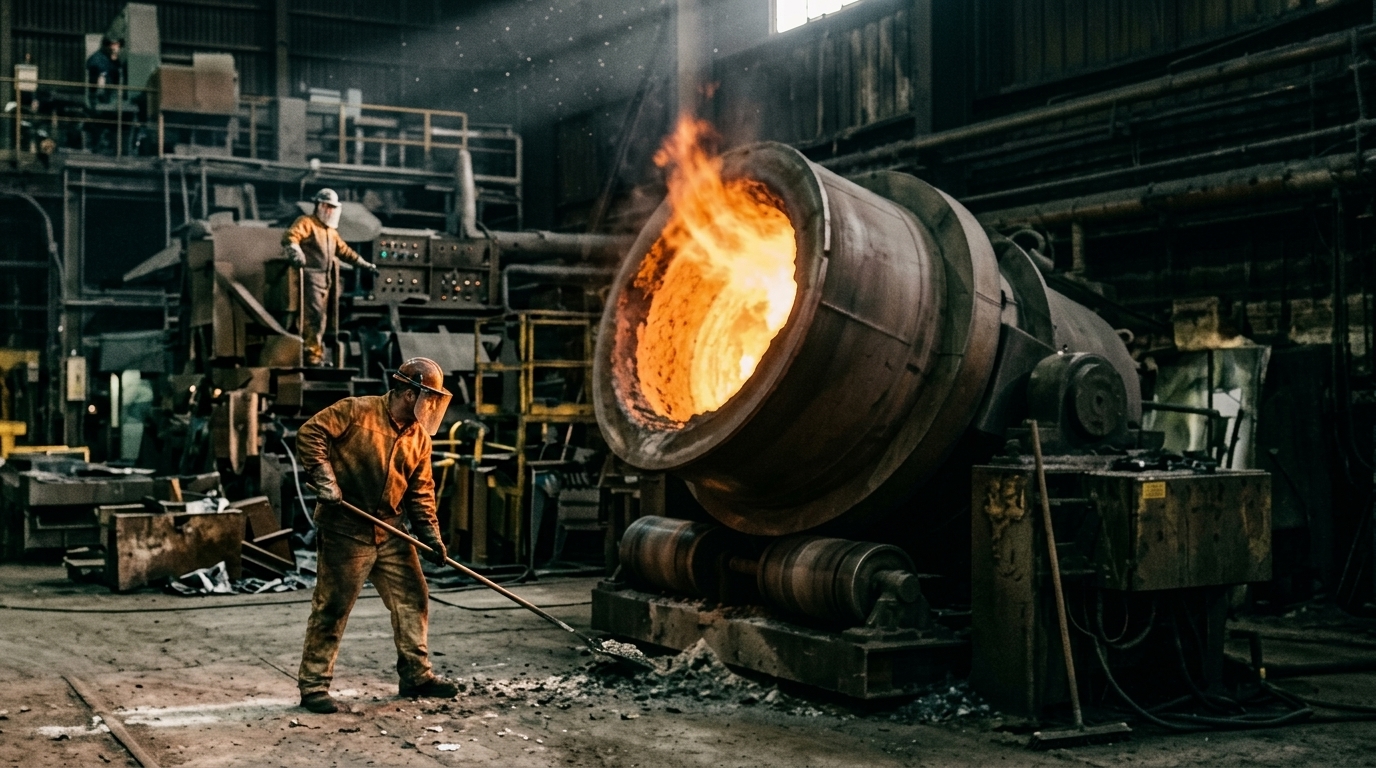
The rotary furnace is one of the most versatile and efficient thermal processing units in modern metallurgy and waste recycling. Unlike static furnaces, a rotary furnace rotates around its axis, constantly tumbling the charge to ensure uniform heating, faster reaction rates, and complete mixing of materials. This article explains the rotary furnace working principle, delves into rotary furnace design features, and answers the most common questions about its operation and applications.
What Is a Rotary Furnace? (Definition and Core Concept)
A rotary furnace is a cylindrical, refractory-lined vessel that rotates slowly (typically 0.5 to 5 revolutions per minute) while being heated from an external or internal heat source. The rotation serves two critical purposes:
- Mixing and agitation – The charge (solid materials like scrap metal, ore, or waste) is constantly lifted and dropped inside the rotating drum, exposing fresh surfaces to the hot gases.
- Heat transfer efficiency – The tumbling action brings the charge into repeated contact with the hot furnace walls and the surrounding combustion gases.
Key difference from static furnaces:
In a static reverberatory or crucible furnace, heat must conduct through a stationary bed of material, leading to hot spots and incomplete processing. The rotary furnace eliminates this by fluidising the charge mechanically through rotation.
Common applications:
- Recycling aluminium scrap (dross processing, melting)
- Secondary lead smelting from battery scrap
- Copper and brass melting
- Calcination of lime and gypsum
- Incineration of hazardous waste
Rotary Furnace Working Principle (How It Operates)
Understanding rotary furnace working requires breaking down the process into four simultaneous actions: loading, heating, rotation, and tapping.
1. Loading the Charge
The furnace is typically tilted to a horizontal or slightly inclined position (1–3° slope) using hydraulic cylinders. Solid charge – such as shredded scrap, fluxes, and reducing agents – is fed through the open front end via a charging chute or conveyor. Once loaded, the door is sealed.
2. Combustion and Heating
A combustion burner mounted at the front or rear end fires a mixture of fuel (natural gas, propane, or pulverised coal) and preheated air into the furnace interior. The flame temperature can reach 1,200–1,600°C depending on the metal being processed. The rotary furnace can also be heated indirectly by external burners surrounding the shell (indirect-fired type) for processes requiring no flame contact.
3. Rotation and Tumbling
The furnace shell is rotated by an electric motor via a gear and pinion drive or a friction roller drive. As it turns, the following happens:
- The charge rises with the wall due to friction and centrifugal force.
- At the top of the rotation arc, the charge falls back in a cascading or cataracting motion.
- This exposes every particle to the hot gas stream and the heated refractory lining.
- Thermal energy penetrates quickly, and chemical reactions (oxidation, reduction, melting) occur uniformly.
4. Slag and Metal Tapping
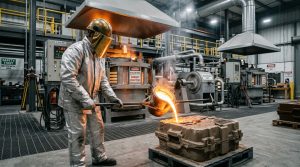
After melting or processing is complete (typically 2–6 hours for a batch), the rotary furnace is tilted forward. The molten metal exits through a tap hole at the front, while slag (impurities and flux residue) is skimmed off or poured from a separate slag spout. Some designs allow continuous tapping during rotation.
Visualising the flow:
Charge in → rotation + heat → melting/reaction → rotation continues (promotes slag‑metal separation) → tilt to pour → clean furnace for next batch.
Rotary Furnace Design: Key Components and Considerations
A well-designed rotary furnace design directly impacts energy efficiency, refractory life, and product quality. Below are the essential engineering elements.
1. Shell and Refractory Lining
- Shell: Usually made of rolled steel plate (10–40 mm thick) with welded rings to maintain cylindrical rigidity. Diameters range from 0.5 m (laboratory units) to 5 m (industrial giants), with lengths 2–10 times the diameter.
- Refractory lining: A high‑alumina or basic (magnesite‑chrome) brick layer (150–300 mm thick) protects the steel from heat and chemical attack. The lining is designed to be replaceable, as slag corrosion and thermal cycling gradually erode it.
2. Drive System and Rotation Mechanism
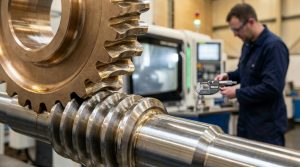
- Girth gear and pinion: Most common for large furnaces. The gear is bolted around the shell, driven by a motor with a variable‑frequency drive (VFD) for speed control.
- Roller support rings (tyres): Two or more steel tyres ride on bogie‑mounted rollers, allowing smooth rotation while bearing the furnace weight.
- Backup drive: An auxiliary engine (diesel or electric) ensures rotation during power failures to prevent deformation of the shell.
3. Burner and Combustion System
- Axial burner: Placed at the charging end, flame shoots down the centre of the drum.
- Tangential burner: Mounted at an angle so the flame swirls, improving gas‑charge contact.
- Oxygen enrichment: Often added to raise flame temperature for high‑melting metals (e.g., copper).
4. Sealing System
The rotating ends must seal against stationary hoods to prevent air leakage and dust emissions. Common seals include:
- Labyrinth seals
- Graphite block seals
- Air purge seals
5. Tilt Mechanism
Hydraulic cylinders lift the front of the furnace to pour molten metal. Tilt angles typically range from 0° (horizontal, during heating) to 25° (full pour position).
6. Environmental Controls
A dust collection system (baghouse or scrubber) captures off‑gases containing volatile metals, dioxins, and particulates – critical for compliance with EPA and local regulations.
Design trade‑off:
Longer, larger‑diameter furnaces increase capacity but require more torque and stronger refractory. The optimal rotary furnace design balances batch size, cycle time, and refractory maintenance costs.
Types of Rotary Furnaces (Variations for Different Processes)
Not all rotary furnaces are identical. Here are the main variants:
| Type | Rotation | Heating | Best For |
| Direct‑fired batch | Intermittent | Internal flame | Aluminium dross, lead recycling |
| Direct‑fired continuous | Continuous | Internal flame | Cement clinker, lime calcination |
| Indirect‑fired | Continuous | External burners | Materials that must not contact combustion gases (e.g., hazardous waste pyrolysis) |
| Submerged combustion | Intermittent | Burner submerged in melt | Lithium‑ion battery recycling, low‑melting alloys |
Advantages and Limitations of Rotary Furnace Working
Advantages
- High thermal efficiency – Tumbling action transfers heat faster than static beds.
- Uniform product quality – Every particle experiences the same treatment.
- Handles heterogeneous feeds – Can process scrap with large size variations, oily residues, or attached non‑metallics.
- Low metal oxidation – The rotating bath continuously exposes fresh metal to flux, reducing oxide formation (especially in aluminium furnaces).
- Simple construction – Fewer moving parts than electric induction or hearth furnaces.
Limitations
- Batch operation – Most rotary furnaces work in batches, not continuous flow (except cement kilns).
- Refractory wear – The constant tumbling and slag attack require relining every 6–24 months.
- Higher maintenance – Drive gears, tyres, and rollers need regular alignment and lubrication.
- Limited temperature – Refractory bricks limit maximum operating temperature to ~1,650°C (above this, ceramic fibre or water‑cooled designs are needed).
Key Operational Parameters (For Engineers and Operators)
To optimise rotary furnace working, control these variables:
- Rotational speed – Faster speeds improve mixing but increase refractory erosion. Typical: 1–3 RPM.
- Fill ratio – Usually 15–30% of internal volume. Too much charge reduces tumbling effectiveness; too little wastes energy.
- Inclination angle – 1–3° for batch furnaces (steeper for continuous flow). Adjusts residence time.
- Flame length and position – Should not directly impact the refractory wall (causes spalling). Flame adjusts via secondary air.
- Flux type and amount – For aluminium: NaCl/KCl salts. For lead: sodium carbonate or iron turnings. Flux absorbs impurities and lowers melting temperature.
Frequently Asked Questions About Rotary Furnace Working
Q1: What is the difference between a rotary furnace and a rotary kiln?
A rotary kiln is a continuous, slightly inclined cylinder used to process solids at high temperature without melting them (e.g., cement clinker, iron ore pellets). A rotary furnace is a batch or semi‑batch furnace specifically designed to melt metals or conduct liquid‑phase reactions. The terms are sometimes used interchangeably, but the furnace implies a melting process.
Q2: How long does a typical batch take?
For a 5–10 tonne capacity rotary furnace processing aluminium scrap, a complete cycle (charge → heat → melt → slagging → pour) takes 3–6 hours. Lead recycling from battery scrap takes 8–12 hours due to reduction reactions.
Q3: Can a rotary furnace handle steel or iron?
Not practically. Steel melts at ~1,500°C, which is at the upper limit of refractory bricks. The furnace would need a very high‑grade lining and oxygen enrichment. Induction or arc furnaces are preferred for ferrous metals.
Q4: Why does a rotary furnace need flux?
Flux serves several purposes in rotary furnace working:
- Covers the molten metal to prevent oxidation.
- Dissolves non‑metallic impurities (oxides, sand, paint residues).
- Lowers the melting point of certain slag systems.
- Protects refractory from chemical attack.
Q5: Is a rotary furnace energy‑efficient compared to induction furnaces?
No. Induction furnaces are 60–75% efficient (heat directly in the metal), while rotary furnaces are 30–50% efficient (heat the refractory, then the metal). However, rotary furnaces are much cheaper to buy and can process dirty scrap that would damage an induction coil. The choice depends on scrap quality and production volume.
Q6: How do you prolong refractory life?
- Avoid overheating – stay below the refractory’s maximum service temperature.
- Use a consistent flux chemistry – certain fluxes (e.g., fluorspar) aggressively eat brick.
- Perform a proper curing schedule after relining (slowly increase heat to drive out moisture).
- Apply a slag coating (glaze) on the hot face to seal cracks.
- Monitor rotation alignment – wobbling causes point wear.
Q7: What safety hazards are unique to rotary furnaces?
- Rotating parts – Pinch points between tyres and rollers.
- Charging explosions – Wet or sealed containers (aerosol cans, batteries) can explode when heated. Pre‑sort and dry the charge.
- Molten metal ejection – If the rotation throws unmelted scrap into the tap hole, metal can spurt out.
- Carbon monoxide from incomplete combustion – Maintain proper air‑fuel ratio; monitor exhaust gas.
Conclusion: Why the Rotary Furnace Remains Indispensable
The rotary furnace is not the newest or flashiest technology, but its combination of mechanical simplicity, ability to process contaminated scrap, and uniform heating makes it the workhorse of secondary metal recycling. Whether you are melting 20 tonnes of aluminium dross per day or recovering lead from old car batteries, understanding rotary furnace working principles and paying attention to rotary furnace design details will lead to higher yields, lower operating costs, and extended equipment life.
For engineers looking to specify a new furnace, remember: rotation speed, refractory choice, and flux practice are the three levers that separate a profitable operation from a maintenance nightmare.


Post Comment